

The recent Second World Humanoid Robot Games in Beijing produced several moments that quickly caught the attention of people online. Some racing robots crashed into safety pads after reaching the finish line, while others fell face-first during obstacle courses. In another incident, a weightlifting robot moved towards the judges’ area with a barbell still in its hands, forcing officials to quickly move away. A few years ago, such scenes would have attracted heavy criticism and ridicule. Today, however, people appear more willing to laugh at the mistakes while still appreciating the progress being made.
This change goes beyond people simply becoming familiar with robots. There is now a better understanding that technology does not develop perfectly from the beginning. Humanoid robots are becoming more advanced, with improvements in movement, sensing, coordination and other important technologies helping them move closer to real-world use. As a result, the public is no longer judging the entire industry based on a single fall or malfunction.
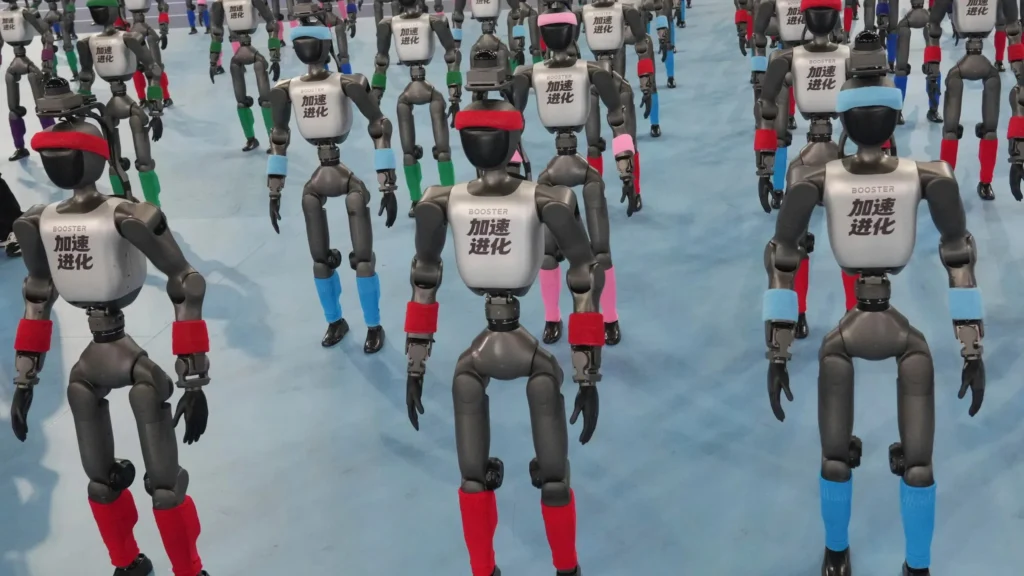
The patience people are showing is also connected to the progress they can clearly see. Although the games produced plenty of funny moments, they also demonstrated improvements in speed, jumping, strength, balance and the ability of robots to move through complex environments. Like a child learning how to walk, humanoid robots are improving step by step. The belief is that many of today’s weaknesses can be corrected through further testing and development.
What may look like an embarrassing moment to spectators can be valuable to researchers. Every fall, crash or unexpected movement gives developers information that can be used to improve the next version. Behind a few seconds of failure are often years of research, testing and repeated adjustments. In that sense, robots making mistakes in public may simply be part of the process of helping the technology grow faster.
This understanding reflects a more mature view of innovation. Major technological industries are rarely built without mistakes, setbacks and years of experimentation. The development of China’s new-energy and photovoltaic industries followed a similar path, beginning with expensive and less-developed technologies before years of research and improvement helped turn them into globally competitive sectors.
However, accepting mistakes does not mean lowering expectations. The robotics industry must continue addressing its weaknesses and improving the quality, safety and reliability of its machines. The public may be willing to give the technology time to develop, but companies and researchers must use that patience to deliver meaningful progress.
Humanoid robots will continue to fall, malfunction and create more amusing moments. But the growing public reaction shows that people are now looking beyond the spectacle. Instead of seeing every failure as proof that the technology is not ready, many are beginning to see mistakes as part of a longer journey. Each setback can offer a lesson, and every improvement can bring humanoid robots one step closer to becoming a more useful part of everyday life.